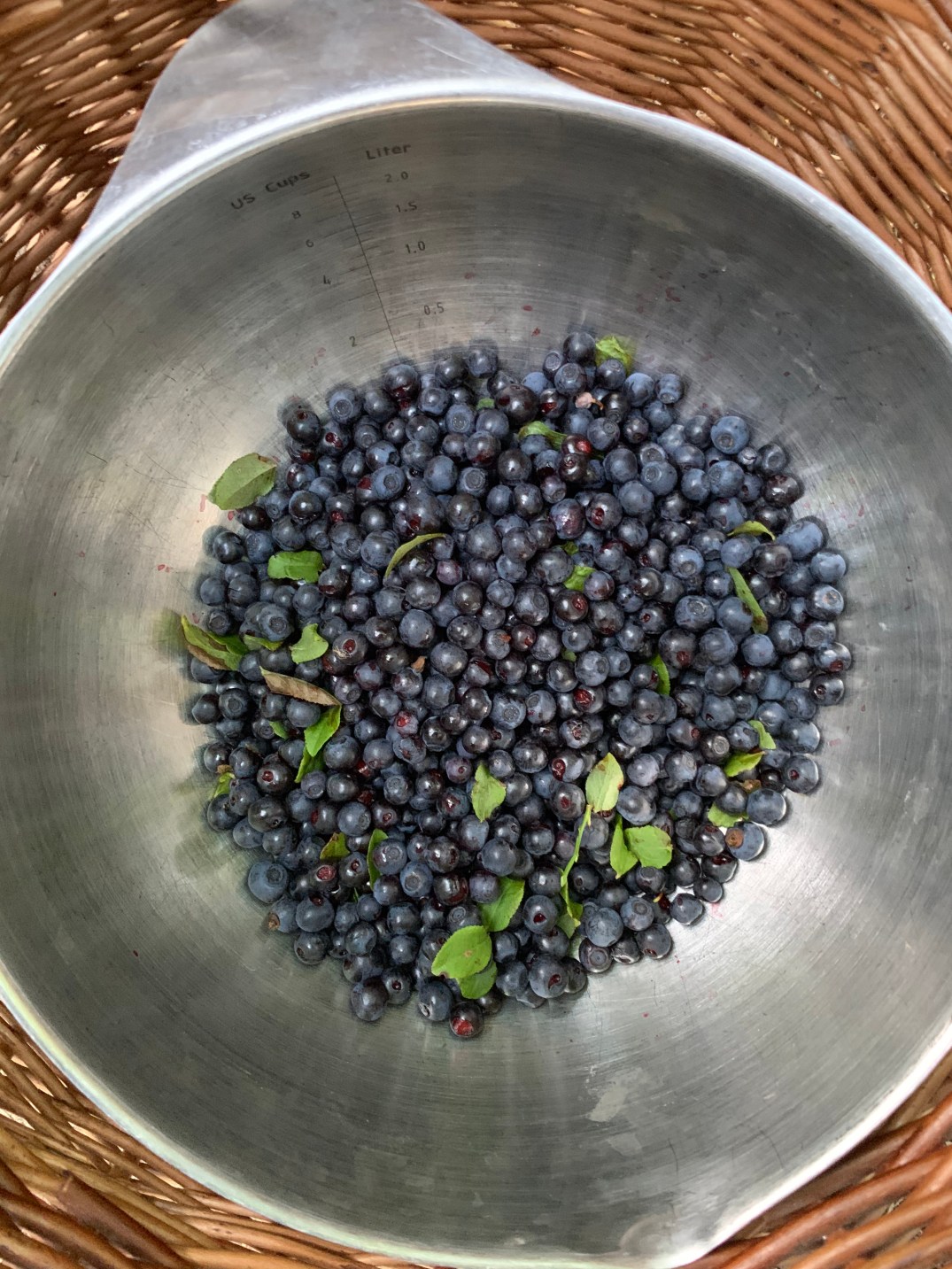
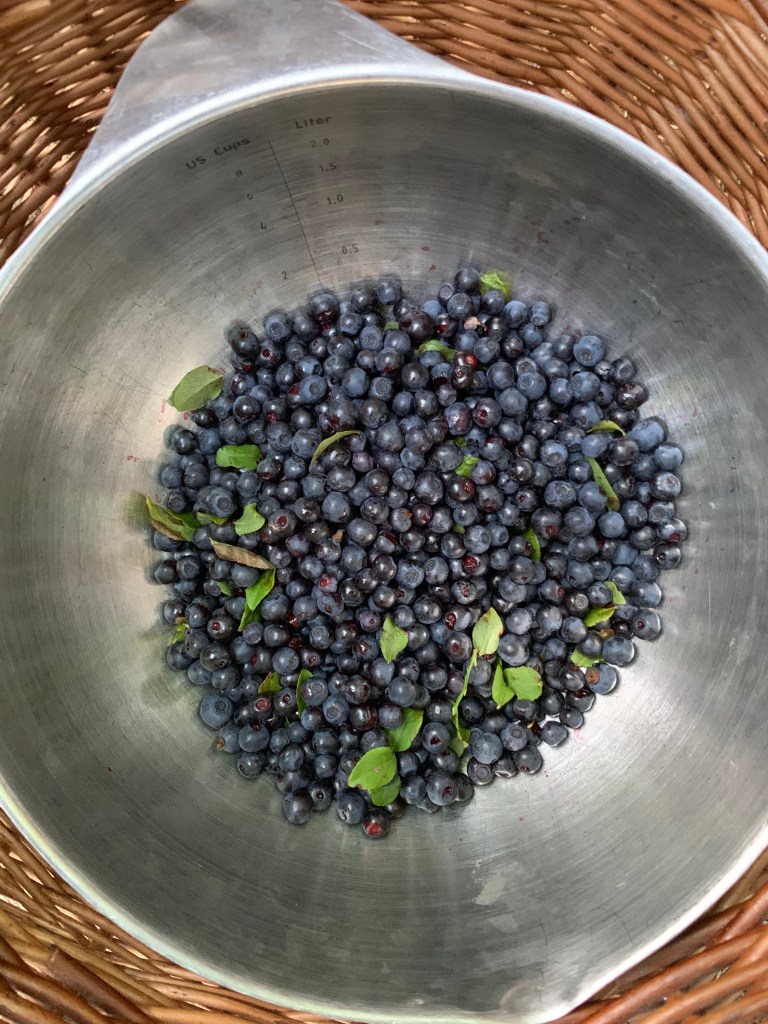
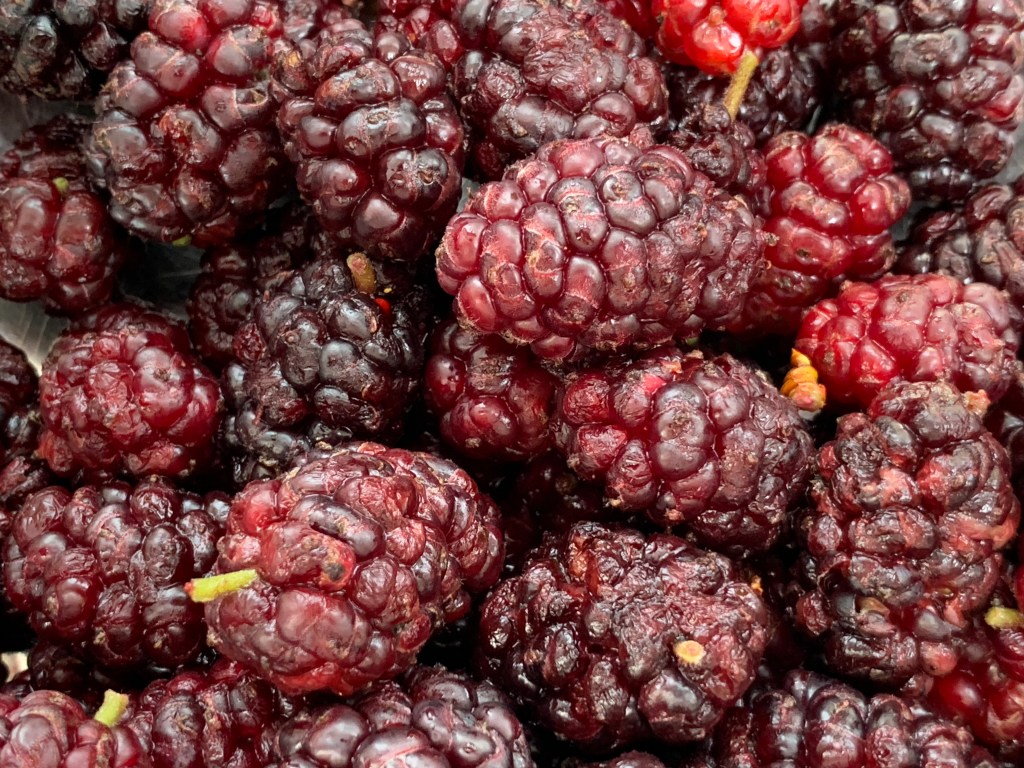
Late summer is a wonderful time in the UK. A walk in the countryside transforms into an opportunity to collect things to eat. On recent walks we have found bilberries in our local wood, blackberries in fields and, to huge delight, mulberries in what must be the remains of an old orchard, now overgrown, where a farm once stood. There are plums and greengages to be harvested from the orchard too when they are ready. On a recent trip to a wood some distance away, we found wild raspberries and saw cobnuts growing. My daughter recently found oyster mushrooms in the wild in the Lake District, she was brave enough to eat them and lives to tell the tale. Nature’s bounty is all around us if we just look.

There is something deeply satisfying about foraging, gathering your own food, perhaps it resonates with a deep instinct to do so, from those times when foraging was a necessity rather than a luxury afforded to those fortunate enough to have access to the green spaces where wild foods are found. But sadly, the other day, when I took a group of young teenagers for a walk in the woods, they were very wary of eating anything from the wild. Many people have become too used to food being boxed and packaged and only ok if bought in a supermarket, many of us have lost our connection to nature and our ability to read the world around us.
As my daughter and I picked fruit we realised that you only see what is there once you start looking for it, a bilberry bush which, at first glance only has a few berries turns out to have many more once your eyes have adjusted and you understand how the berries hide behind the leaves. Perhaps there is a lesson for us all in that – seek and you will find!
 Life Gathers